Kathleen Richardson is a social anthropologist and ethicist of technology.

Upcoming Talks

“The egocentric I, the undifferentiated we, and I-you attachment; A pronominal political-ethical approach to technological attachment figures from robots to AI”

Vienna University of Technology (31. 3. 26)

Abolishing child abuse: building a politics of love through I-you attachment”

Derby Women’s Festival (9.5.26)

“Exploring love with robots and AI through a political-ethical pronominal framework of the “egocentric I”, the “undifferentiated we” and “I-you attachment”.” 

Darmstadt University (3.6.26)

“Moving Beyond the Egocentric I and the Undifferentiated We: How to build robots informed by the politics of love and I-you attachment”

Keynote: European Robotics Society (14-16.12.26)

I am a Professor of Ethics and Culture of Robots and AI at De Montfort University, Leicester.
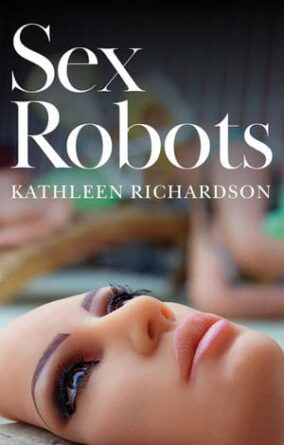
My new book Sex Robots: The End of Love is out in 2025. Read a review here by Julie Bindel and listen to a podcast on The Lesbian Project with Julie Bindel and Kathleen Stock and a podcast FEFO.
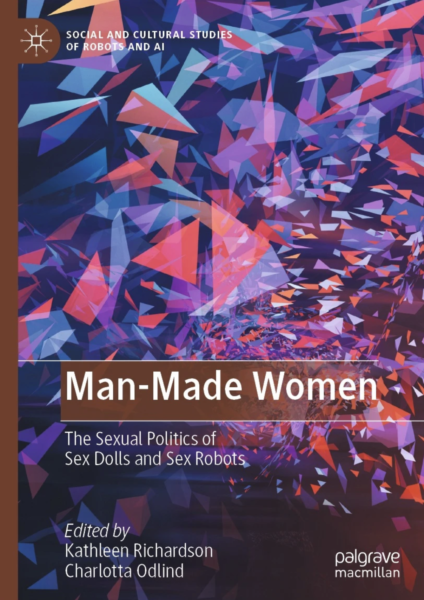
My single authored books include An Anthropology of Robots and AI: Annihilation Anxiety and Machines (2015) and Challenging Sociality: An Anthropology of Autism, Attachment and Robots (2018). I co-edited The Sexual Politics of Sex Dolls and Sex Robots (2023).
I have worked as a cultural ethicist on several European Commission funded projects including DREAM (Development of Robot-Enhanced Therapy for Children with Autism), REELER (Responsible Ethical Learning in Robotics), TECHETHOS (Ethics for Technologies with High Socio-Economic Impact) and SHARESPACE (Embodied Social Experiences in Hybrid Shared Spaces).
In 2015 I launched the Campaign Against Sex Robots (now Porn Robots) and campaigns for women’s sex-based rights and child protections.
In 2023  several female colleagues and I were cancelled by the American Anthropological Association and the Canadian Association of Social Anthropology for wanting to discuss the importance of biological sex as an analytic category. You can see the banned seminar here kindly hosted by Heterodox. 
I am a vegan and advocate for a vegan life and the abolition of all animal cruelty industries.
 

Book Launch: Sex Robots: The End of Love

Sex Robots: The End of Love (UK September 2025 and the US November 2025)

This book presents a unique, feminist approach to ‘sex’ dolls and ‘sex’ robots, taking a critical look at the academic and business narratives that serve to rationalise them. As new forms of pornography (porn robots), this edited volume provides an urgent women’s centred critique.

The emergence of ‘sex’ robots is situated within the wider context of the attack on women’s rights and the relentless rise of techno-pornography. As an outgrowth of the  industries of prostitution, pornography and child sex abuse, these objects offer new ways to dehumanise women and girls. While support for ‘sex’ robots is positioned as progressive and emancipatory, the contributors in this volume argue they reduce women to consumable parts. They explore how law, the arts, ethics, economy, politics and culture are interconnected with harmful technological developments.

This book explores the development of humanoid robots for helping children with autism develop social skills based on fieldwork in the UK and the USA. Robotic scientists propose that robots can therapeutically help children with autism because there is a “special” affinity between them and mechanical things. This idea is supported by autism experts that claim those with autism have a preference for things over other persons. Autism is also seen as a gendered condition, with men considered less social and therefore more likely to have the condition. The author explores how these experiments in cultivating social skills in children with autism using robots, while focused on a unique subsection, is the model for a new kind of human-thing relationship for wider society across the capitalist world where machines can take on the role of the “you” in the relational encounter. Moreover, underscoring this is a form of consciousness that arises out of specific forms of attachment styles. 

This book explores the making of robots in labs at the Massachusetts Institute of Technology (MIT). It examines the cultural ideas that go into the making of robots, and the role of fiction in co-constructing the technological practices of the robotic scientists. The book engages with debates in anthropological theorizing regarding the way that robots are reimagined as intelligent, autonomous and social and weaved into lived social realities. Richardson charts the move away from the “worker” robot of the 1920s to the “social” one of the 2000s, as robots are reimagined as companions, friends and therapeutic agents.